
Summary:
- May 5th, 2026: Claude Finance Agents: 10 New Tools Disrupt Wall Street
- May 6th, 2026: OpenAI B2B Signals: Frontier AI Users Pull Ahead 3.5x
- May 12th, 2026: Microsoft MDASH Security Tops CyberGym With 88.45% Score
- May 19th, 2026: Gemini 3.5 Flash: Google Drops 4x Faster AI Model
- May 20th, 2026: Qwen3.5 LiveTranslate: 60 Languages at 2.8s Latency
Claude Finance Agents: 10 New Tools Disrupt Wall Street
Date: May 5, 2026
Meta Description: Anthropic launches 10 Claude finance agents scoring 64.37% on the Vals AI benchmark. Explore how Microsoft 365 integration transforms workflows now!
On May 5, 2026, Anthropic announced the release of 10 ready-to-run financial agent templates engineered to automate intricate, labor-intensive tasks within the financial services sector. Built to deploy as plugins within Claude Cowork and Claude Code, or as cookbooks for Claude Managed Agents, these templates allow institutional finance teams to set up secure AI workflows in days rather than months.
This rollout aligns with the capabilities of Claude Opus 4.7, which currently leads the industry on Vals AI's Finance Agent benchmark with an elite score of 64.37%. To provide extensive desktop compatibility, Anthropic has introduced specialized Claude add-ins across the Microsoft 365 suite, including Excel, PowerPoint, Word, and coming soon to Outlook. Data context transitions automatically between these applications, meaning complex work started in a spreadsheet can generate an executive slide deck without manual re-prompting.
Claude Finance Agents: Automating Core Financial Operations
The newly launched templates serve as comprehensive reference architectures, combining tailored instructions, deep domain knowledge, governed data connectivity, and targeted subagents. The tools are explicitly split between front-office research and back-office operations. For research and client coverage, the templates include a Pitch builder, Meeting preparer, Earnings reviewer, Model builder, and Market researcher. These agents independently compile target lists, construct financial models directly from regulatory filings, and flag sector developments for risk evaluation.
For core operations and middle-office management, the suite offers a Valuation reviewer, General ledger reconciler, Month-end closer, Statement auditor, and KYC screener. These modules automate account reconciliation, execute net asset value calculations, evaluate source documentation for regulatory compliance, and produce audit-ready close reports. In all deployment models, human professionals remain directly in the loop to review, iterate, and approve every output before it is finalized.
Managed Deployment on the Claude Platform
When implemented as Claude Managed Agents, these architectures run autonomously on the Claude Platform to manage nightly schedules or multi-hour deal closures. This enterprise-grade configuration builds out infrastructure with dedicated tool permissions, managed credential vaults, and full compliance transparency through granular tool-call audit logs located in the Claude Console.
The Ecosystem and Roadmap for Claude Finance Agents
To maximize performance, these agents pull directly from the internal systems, data warehouses, and market research platforms that financial professionals already utilize. Major global institutions, including Citadel, FIS, BNY, Carlyle, Mizuho, Travelers, Walleye Capital, Hg, Morningstar, and FactSet, are actively incorporating Claude into their technology stacks to optimize operational efficiency and compress multi-day procedures into minutes.
- Microsoft 365 Add-ins: General availability is active for Excel, PowerPoint, and Word, with an Outlook add-in arriving soon to handle automated inbox triage and meeting coordination.
- Moody's MCP App: A custom integration that delivers proprietary credit ratings and analytical data covering more than 600 million public and private organizations natively inside Claude.
- Enterprise Data Connectors: New real-time, governed data connectors are live from prominent market intelligence providers including Dun & Bradstreet, Fiscal AI, Financial Modeling Prep, Guidepoint, IBISWorld, SS&C Intralinks, Third Bridge, and Verisk.
Immediate Availability: All 10 financial agent templates are accessible via the Anthropic financial services marketplace for users on paid plans and programmatic public beta tiers.
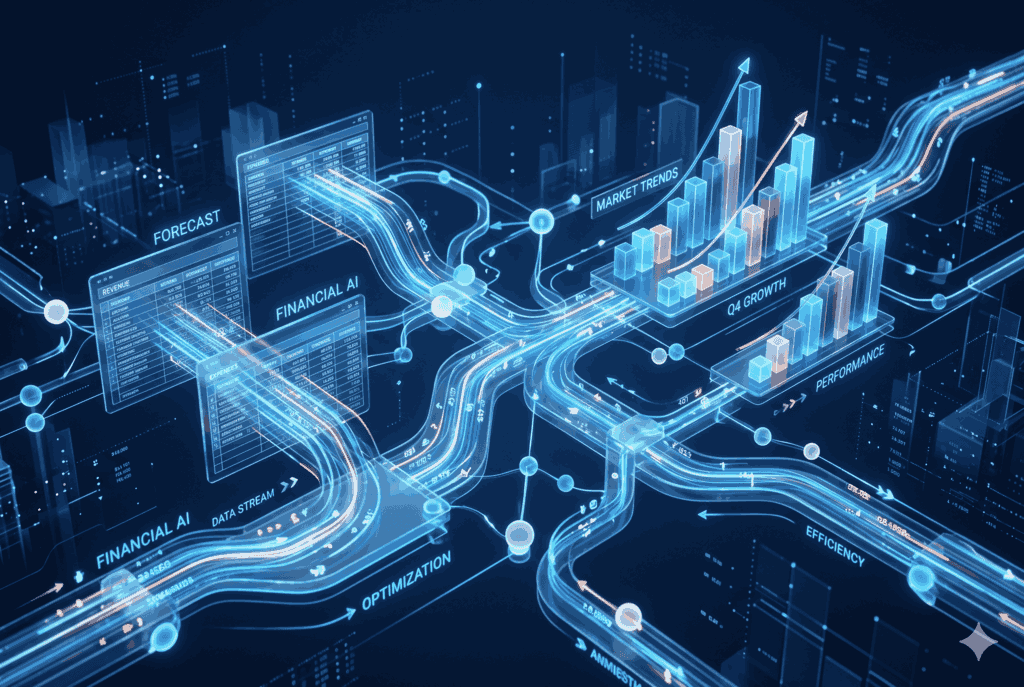
OpenAI B2B Signals: Frontier AI Users Pull Ahead 3.5x
Date: May 6, 2026
Meta Description: OpenAI introduces B2B Signals data tracking. Frontier firms now use 3.5x more AI intelligence per worker than typical peers. See the enterprise stats!
On May 6, 2026, OpenAI introduced B2B Signals, a specialized business intelligence extension of OpenAI Signals. The new tracking tool relies on privacy-preserving, aggregated enterprise usage data to measure the depth, specialization, and delegation of artificial intelligence across corporate functions. The initiative uncovers a widening operational disparity between advanced AI adopters and standard enterprises, showcasing how elite organizations extract compounding value from automated workflows.
The initial dataset establishes that frontier firms, classified as those at the 95th percentile of corporate usage, now consume 3.5x as much AI intelligence per employee as typical firms. This represents a significant increase from the 2x metric recorded in April 2025. Rather than merely reflecting higher communication activity, total message volume accounts for just 36% of this operational gap. The primary differentiator is interaction depth, with advanced enterprises leveraging generative tools to manage multi-step, contextual tasks rather than simple text queries.
OpenAI B2B Signals Tracks Shift to Complex Work and Code Automation
The core data from B2B Signals indicates that advanced enterprise AI usage has shifted significantly toward specialized developer tools and tool-based workflows. The widest adoption variance between leading and typical organizations occurs within Codex, where frontier firms generate 16x as many messages per employee compared to standard corporate users. This behavioral trend extends across other delegated intelligence products, including ChatGPT Agent, Apps in ChatGPT, Deep Research, and custom GPTs.
In production environments, specific business case studies demonstrate tangible efficiency improvements. For example, Cisco implemented Codex across its massive engineering organization, reducing software build times by 20% while saving over 1,500 engineering hours per month. Furthermore, the integration helped accelerate the company's defect-resolution throughput by 10-15x. This shift shows that leading teams are treating AI models as collaborative team members rather than basic search interfaces.
Industry-Specific Diffusion and System Integration
Enterprise application is also becoming highly customized by department. While IT and Security divisions focus heavily on procedural guides, Software Development and Data Science teams drive coding usage, and Finance departments apply the technology toward calculations. For instance, Travelers Insurance integrated an AI Claim Assistant that directly manages customer claims inside internal databases, with the projection to handle 100,000 first notice of loss calls during its initial year of deployment.
Why Frontier Adopters Lead the Next Enterprise AI Phase
The performance gap between typical users and frontier companies highlights actionable strategies that forward-thinking organizations use to build sustained operational momentum. The biggest task-level advantage for leading firms resides in the education and learning category, demonstrating that elite adopters use generative technology to upskill workers. Moving forward, OpenAI plans to provide recurring data updates through the tracking suite to map the ongoing transformation of business work.
- Tracking Usage Depth: Leading enterprises look past basic login metrics to measure the specific volume of tokens generated per employee as a proxy for complex task execution.
- Production-Grade Governance: Elite firms establish clear structural guardrails that safely transition experimental chat tools into integrated production software systems.
- Core Infrastructure Enablement: Top organizations prioritize ongoing employee training to build collective habits, confidence, and internal documentation.
- Transition to Agentic Delegation: Advanced businesses move past chat-based assistants toward autonomous agents capable of independent tool use, file manipulation, and long-horizon tasks.
Microsoft MDASH Security Tops CyberGym With 88.45% Score
Date: May 12, 2026
Meta Description: Microsoft’s new MDASH security system tops CyberGym with an 88.45% score and finds 16 critical Windows bugs. Click to see how agentic AI alters defense.
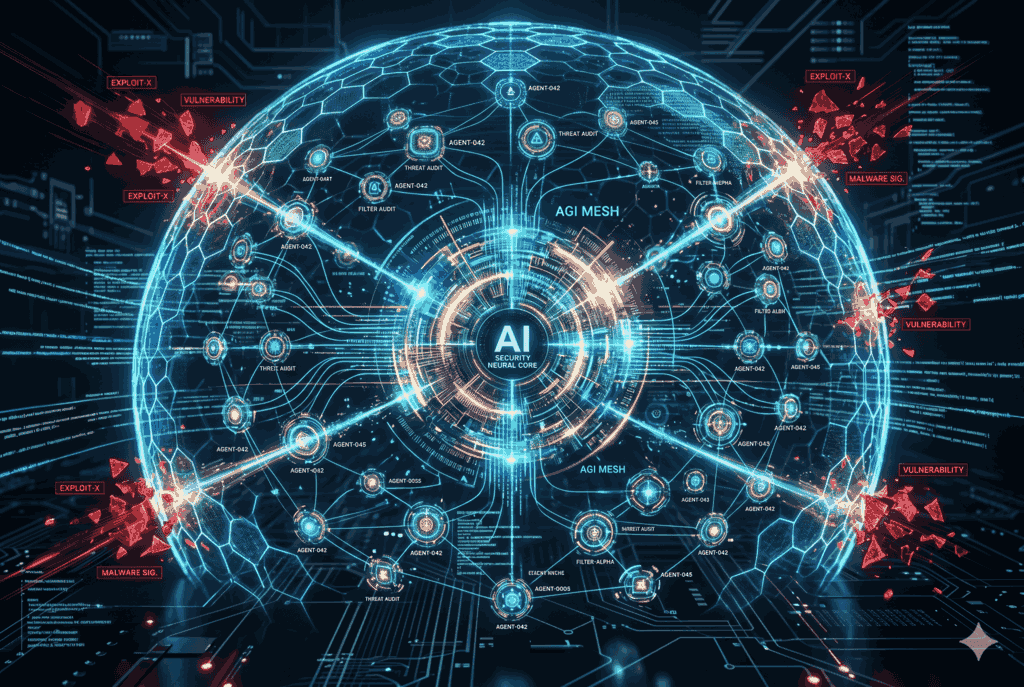
On May 12, 2026, Microsoft unveiled a significant advancement in automated cyber defense by introducing its multi-model agentic scanning harness, codenamed MDASH. Developed by the Autonomous Code Security team, the system coordinates an ensemble of over 100 specialized AI agents across frontier and distilled models to discover, debate, and prove code vulnerabilities end-to-end.
The deployment highlights a shift toward production-grade AI defense at scale, drawing from the engineering expertise of Team Atlanta, the group that won the DARPA AI Cyber Challenge with a $29.5 million total program framework and a $6 million first-place prize. In active operations, MDASH successfully identified 16 new vulnerabilities across the Windows network stack, including 4 critical remote code execution flaws within the Windows kernel TCP/IP stack and the IKEv2 service.
The multi-model agentic scanning harness proved its efficacy across both private and public security benchmarks. In a baseline evaluation using StorageDrive, a private device driver containing 21 deliberately injected vulnerabilities, MDASH successfully identified all 21 flaws with 0 false positives. Furthermore, retrospective testing against 5 years of confirmed Microsoft Security Response Center (MSRC) cases yielded a 96% recall rate in clfs.sys and a 100% recall rate in tcpip.sys.
On the public CyberGym benchmark, which comprises 1,507 real-world vulnerability reproduction tasks across 188 open-source projects, MDASH achieved an industry-leading score of 88.45%. This performance positioned Microsoft at the top of the leaderboard, outperforming the next closest entry by approximately 5 percentage points. Failure analysis of the remaining 12% revealed that 82% of missed targets stemmed from vague description data lacking function or file identifiers.
- Five-stage structured pipeline: Features an automated progression through Prepare, Scan, Validate, Dedup, and Prove stages to move from raw codebase analysis to validated findings.
- Multi-model ensemble management: Deploys state-of-the-art models for deep reasoning alongside distilled models as cost-effective debaters to analyze conflicting signals.
- Over 100 specialized agents: Assigns distinct roles, prompt regimes, and criteria for independent auditing, debating, and proving processes.
- Model-agnostic plugin extensibility: Allows domain experts to inject custom context such as kernel calling conventions or CodeQL databases, keeping the system durable against new model generations.
- Limited private preview availability: Currently utilized by internal engineering teams like MORSE and WARP, with select access opening to external customers.
Gemini 3.5 Flash: Google Drops 4x Faster AI Model
Date: May 19, 2026
Meta Description: Google debuts Gemini 3.5 Flash, delivering 4x faster speeds at under half the cost of rival models. See how Salesforce and Shopify deploy these agents today!
On May 19, 2026, Google officially introduced Gemini 3.5, a new family of models engineered to execute complex, agentic workflows. The rollout begins with Gemini 3.5 Flash, a lightweight model optimized for high-speed agentic tasks and coding operations. Designed to eliminate the traditional tradeoff between speed and reasoning quality, the model is already available to billions of users across the global Gemini ecosystem.
This latest model series arrives as organizations increasingly pivot toward autonomous digital agents capable of executing long-horizon tasks. Developed by researchers at Google DeepMind and Google Research, including Koray Kavukcuoglu, Jeff Dean, Oriol Vinyals, and Noam Shazeer, the architecture focuses on running multi-step collaborative subagents at scale. The rollout integrates directly into consumer applications like Google Search alongside dedicated enterprise platforms.
Gemini 3.5 Flash Speed and Benchmark Performance
Gemini 3.5 Flash matches the intelligence of massive flagship models while producing output tokens at a rate 4 times faster than competing frontier AI systems. In evaluations of complex coding and prolonged agentic workflows, the model secured 76.2% on Terminal-Bench 2.1, achieved 1656 Elo on GDPval-AA, and reached 83.6% on MCP Atlas. For multimodal understanding, it led evaluations with an 84.2% score on CharXiv Reasoning.
These latency reductions allow developers to run autonomous tasks at less than half the processing cost of alternative frontier models. When paired with the updated Google Antigravity harness, the model orchestrates multiple subagents to manage messy legacy codebases, restructure unstructured visual assets, or write interactive web user interfaces. In test environments, collaborative agents successfully synthesized a complex research paper and coded a fully functional game within six hours.
Multi-Industry Enterprise Integration
Enterprise platforms are utilizing Gemini 3.5 Flash to automate multi-week administrative and analytical duties. Shopify deploys parallel subagents to generate global merchant growth forecasts, while Salesforce integrates the model into Agentforce to manage multi-turn tool calling. Macquarie Bank uses the technology to parse 100+ page documents to accelerate customer onboarding, Xero automates supplier tracking for 1099 tax forms, and Ramp implements the model for historical pattern reasoning on invoices. Additionally, Databricks applies the agentic system to help data scientists monitor datasets and diagnose errors.
Gemini 3.5 Personal Agents and Safety Framework
The update transitions static AI interactions into active, continuous assistance via persistent personal agents. Google is embedding this capability directly into consumer applications to automate everyday digital management tasks under user supervision. Built under the company's Frontier Safety Framework, the models incorporate advanced interpretability tools to verify internal reasoning paths before generating output, reducing false refusals and mitigating cybersecurity or biochemical risks.
- Gemini Spark personal AI agents will run 24/7 to manage digital workflows for users under direct supervision.
- Trusted testers receive access to Gemini Spark starting May 19, 2026.
- Google AI Ultra subscribers in the US gain access to the Gemini Spark Beta next week.
- Gemini 3.5 Pro is currently undergoing internal testing with an official public release scheduled for next month.
Global availability is live today via the Gemini app, AI Mode in Google Search, Google Antigravity, Gemini API in Google AI Studio, Android Studio, and Gemini Enterprise.
Qwen3.5 LiveTranslate: 60 Languages at 2.8s Latency
Date: May 20, 2026
Meta Description: Alibaba launches Qwen3.5-LiveTranslate-Flash, translating 60 languages at 2.8-second latency with real-time voice cloning. Click to explore the benchmark scores!
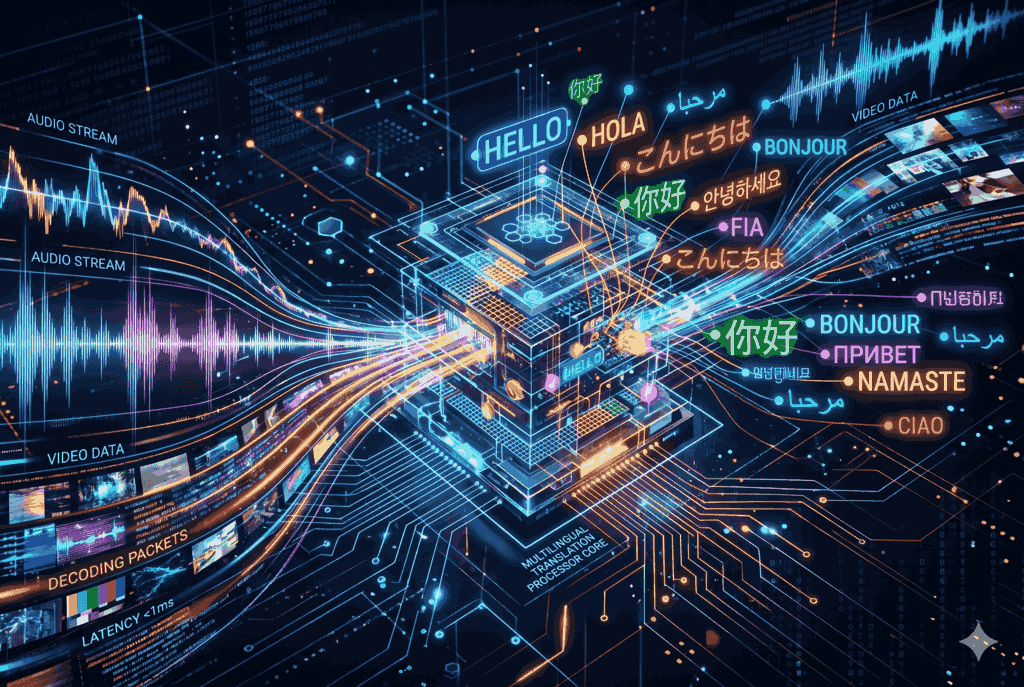
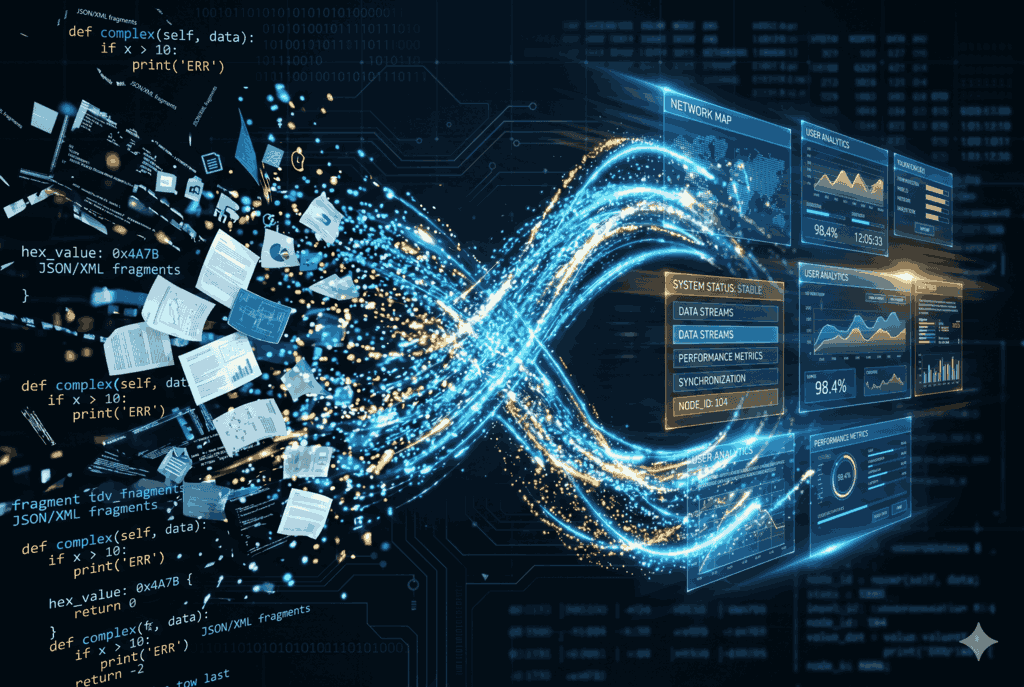
On May 20, 2026, Alibaba's Qwen team introduced Qwen3.5-LiveTranslate-Flash, an AI translation model aimed at solving simultaneous interpretation constraints. The tool reduces delivery delays by processing ongoing speech before sentences wrap up, enabling real-time communications.
The release marks a noticeable shift from the older Qwen3-LiveTranslate-Flash framework, boosting capabilities to handle complex acoustic realities. For software developers building global deployment tools, the new model lessens the need for language switching by embedding multimodal visual checks and voice adaptation directly into the live translation stream.
Qwen3.5-LiveTranslate-Flash Multi-Channel Input Processing
The model drops end-to-end latency down to 2.8 seconds while expanding input support to 60 languages, contrasting with the 18 languages supported by the preceding model. To lower response delays by 200 milliseconds, the system introduces a specialized technique that handles reading units. Rather than buffering complete sentences, the semantic unit prediction logic analyzes streaming data chunks and commits to a translation as soon as sufficient contextual meaning accumulates.
Furthermore, the model operates over a persistent WebSocket connection via the Alibaba Cloud Model Studio and DashScope API, allowing developers to input 16kHz, 16-bit PCM mono audio continuously.
Multimodal Vision Layer Integration
To safeguard translation accuracy in environments with bad acoustics, the system processes visual information alongside speech streams. The vision channel examines on-screen text, gestures, physical objects, and lip movements in real time using base64-encoded JPEG frames sent at approximately 2fps. This secondary data layer clarifies ambiguous phonetic inputs when audio signals suffer from background noise.
Future Capabilities and Features of Qwen3.5 Translation
The architecture moves past generic robotic voice outputs by embedding instant acoustic cloning directly into the translation cycle. By scanning a single spoken sentence from the original speaker, the algorithm isolates characteristic vocal signatures and mirrors them in the target language. The framework addresses technical translation failures through dynamic glossary injections at runtime, improving accuracy for specialized brand names, medical terms, and legal terminology.
- The model scales output speech capabilities to cover 29 distinct languages.
- Input language support expands by more than 3 times compared to previous iterations.
- Benchmark quality metrics exceed major commercial options on both FLEURS and CoVoST2 tracking platforms.
- The processing protocol maintains a single persistent session instead of reconnecting per utterance.
- Custom glossary parameters allow developers to map explicit text pairs like 达芬奇机器人 to da Vinci Surgical System.