
Summary:
- December 14th, 2025: Southeastern Europe Regional Contest in Salonic, Greece, for the ICPC regional
- December 2nd, 2025: DeepSeek V3.2 Matches GPT-5 with 90% Less Training Cost
- December 9th, 2025: AI Usage Data: Roleplay Tops Work in 100T Token Study
- December 10th, 2025: Perplexity AI Agents: Driving Enterprise Efficiency
- December 11th, 20225: Google vs. OpenAI: Gemini 3 Pro Deep Research Meets GPT-5.2
- December 15th, 2025: MIT AI Predicts Embryo Growth with 90% Accuracy
Southeastern Europe Regional Contest in Salonic, Greece, for the ICPC regional
Date: Dec 14, 2025
1 x🥇Gold, 2 x🥈Silver, 2 x🥉Bronze for Romania, at SEERC 2025 (Southeastern Europe Regional Contest) in Salonic, Greece, for the ICPC regional.
I joined as a sponsor of the Romanian Olimpic Team at SEERC with 19 teams from 9 universities, from Bucuresti, Iasi, Craiova, Timisoara, and Cluj.
SEERC exists to test algorithmic problem solving skills under time pressure. It sits in the ICPC pipeline, so strong results can qualify teams to the next stages, including the World Finals, depending on that year’s allocation.
University students compete in teams of three, usually with one coach from their university. Teams come from universities across Southeastern Europe, including Romania, Greece, Bulgaria, Serbia, North Macedonia, Albania, Bosnia and Herzegovina, Montenegro, and nearby countries depending on that year’s rules.
The format is strict, 5 hours, one computer per team, usually 10 to 12 problems, and penalties for wrong submissions. Ranking is solved problems first, then time, so accuracy beats rushing and teamwork decides outcomes.
The hall is almost silent, just keyboards and short whispers. The balloons above the rows of laptops feel like a reminder that this is still a student sport, even when the pressure is real.
TVL Tech is a sponsor of the Romanian Olympic Team of Informatics, together with Adobe and Bitdefender.
Today I met coaches Iapa Catalin from Politehnica Timisoara, Marius Dumitran from UniBuc, and Paul Diac from UAIC, and it was good to see the people behind the work.
If you want to support the Romanian students competing here, drop a short message in the comments. They are doing hard work, and they deserve to feel the whole community behind them.
DeepSeek V3.2 Matches GPT-5 with 90% Less Training Cost
Date: Dec 2, 2025
Description: DeepSeek V3.2 achieves 93.1% accuracy on AIME 2025, matching GPT-5 while using 90% less training compute. Discover how open-source efficiency is reshaping AI economics.
China’s DeepSeek has shattered the "bigger is better" myth by matching OpenAI’s GPT-5 performance with a fraction of the budget. The Hangzhou-based lab released DeepSeek V3.2, an open-source model that rivals frontier US systems in reasoning benchmarks despite significant hardware constraints. By working smarter, not harder, DeepSeek has achieved a breakthrough that could redefine enterprise AI strategies.
The model’s efficiency stems from DeepSeek Sparse Attention (DSA), a novel architecture that drastically reduces computational complexity. While tech giants pour billions into brute-force scaling, DeepSeek’s approach allowed it to score 93.1% on AIME 2025 mathematics problems and a Codeforces rating of 2386, placing it squarely alongside GPT-5. A specialized variant, DeepSeek-V3.2-Speciale, went further, achieving gold-medal status at the 2025 International Mathematical Olympiad, a feat previously reserved for unreleased internal models from top US firms.
DeepSeek V3.2: Efficiency Over Brute Force
The DeepSeek V3.2 technical report attributes its success to architectural precision rather than raw power. The DSA mechanism replaces traditional attention models (which process all data equally) with a "lightning indexer" that selects only relevant tokens. This reduces core complexity from O(L²) to O(Lk), enabling the model to process 943.7 billion tokens using far fewer resources.
Speciale: The Reasoning Specialist
The "Speciale" variant demonstrates the power of targeted reinforcement learning. By allocating a post-training budget exceeding 10% of pre-training costs, DeepSeek optimized the model for complex problem-solving without massive pre-training expansion. This resulted in 96.0% accuracy on the AIME 2025 and 99.2% on the Harvard-MIT Math Tournament.
For enterprises, DeepSeek V3.2 offers a high-performance alternative to costly proprietary APIs. By open-sourcing the base model on Hugging Face, DeepSeek allows organizations to deploy frontier capabilities on their own infrastructure, avoiding vendor lock-in.
- Expand World Knowledge: Future iterations will focus on scaling pre-training resources to close the "knowledge gap" with proprietary models like Gemini 3 Pro.
- Optimize Token Efficiency: Current models require longer reasoning chains; optimization will focus on achieving the same results with fewer tokens.
- Enhance Agentic Workflows: Building on the 1,800 distinct environments synthesized for training, DeepSeek aims to refine autonomous tool-use capabilities.
- Refine Foundation Architecture: Continued improvements to DSA will further lower the barrier to entry for advanced reasoning tasks.

AI Usage Data: Roleplay Tops Work in 100T Token Study
Date: Dec 9, 2025
OpenRouter analyzed 100 trillion tokens to reveal that 50% of open-source AI usage is roleplay, while programming queries surged to 50% of total traffic.
A massive new analysis of 100 trillion tokens by OpenRouter exposes a sharp contrast between corporate narratives and actual user behavior. While tech giants tout enterprise productivity, the data reveals that over 50% of open-source AI model interactions are driven by roleplay, interactive fiction, and creative storytelling rather than traditional business workflows.
Simultaneously, the technical landscape has undergone a radical shift. Programming-related queries exploded from 11% in early 2025 to over 50% of total usage by year's end. This surge is accompanied by a fourfold increase in prompt length, jumping from 1,500 to 6,000+ tokens, as developers utilize platforms like Anthropic’s Claude (which holds a 60% share in coding) for complex debugging and architectural problem-solving rather than simple code generation.
Open-Source AI Trends: The Roleplay and Coding Divide
The study invalidates the assumption that open-source Large Language Models (LLMs) are primarily utilitarian tools for emails or summarization. Instead, the majority of open-source traffic is fueled by users engaging in structured gaming scenarios and companionship, effectively treating these models as roleplaying engines. This "invisible" use case now dwarfs standard productivity tasks.
Conversely, the professional sector is consolidating around deep technical work. Programming queries now generate the most complex interactions in the AI ecosystem, with some requests exceeding 20,000 tokens. The data also highlights a geopolitical shift: Chinese models from companies like DeepSeek and Alibaba now account for 30% of global usage, nearly tripling their share from the start of the year. DeepSeek alone processed 14.37 trillion tokens, signaling that Western dominance in the AI model layer is no longer unchallenged.
Market Evolution: Agentic Shifts and Retention
The industry is moving rapidly from simple text generation to "agentic inference," where models execute multi-step reasoning tasks. This transition is redefining how value is measured, shifting focus from raw token price to reasoning capability and problem-solving "fit."
- Agentic Dominance: Interactions classified as "reasoning-optimized" jumped from near zero to over 50%, indicating a move toward autonomous agents that plan and persist across contexts.
- The "Glass Slipper" Effect: Retention is driven by "first-to-solve" capability rather than brand loyalty. For instance, Google’s Gemini 2.5 Pro retained 40% of its June cohort five months later because it solved specific high-value problems first.
- Price Inelasticity: The market is not a race to the bottom; a 10% decrease in price correlates with only a 0.5-0.7% increase in usage, proving users prioritize quality over cost.
Asian Market Growth: AI spending in Asia more than doubled, rising from 13% to 31%, with Singapore emerging as the second-largest country by usage.

Perplexity AI Agents: Driving Enterprise Efficiency
Date: Dec 10, 2025
Perplexity reveals 57% of agent activity targets deep cognitive work, with the market projected to hit $199 billion by 2034.
A groundbreaking study by Perplexity, analyzing hundreds of millions of interactions via its Comet browser and assistant, confirms that "agentic AI" has moved beyond hype to become a critical enterprise asset. The data reveals that 57% of all agent activity is focused on complex cognitive work rather than simple administrative tasks, with high-value knowledge workers in finance, tech, and academia driving adoption.
Unlike standard chatbots, these agents are now executing multi-step workflows,like filtering stock options or synthesizing vendor case studies,with minimal supervision. The report highlights that the "Digital Technology" sector accounts for 28% of adopters and 30% of total queries, proving that the most expensive assets in an organization (engineers and analysts) are rapidly integrating autonomous agents to scale their capabilities.
The Shift to Cognitive Workflows
The study challenges the narrative that AI agents are mere digital butlers. Instead, the dominant use case is "Productivity & Workflow," capturing 36% of all queries, followed by "Learning & Research" at 21%. This indicates a shift where agents act as thinking partners, cycling through "thinking, acting, and observing" phases to manipulate data within core tools like Google Docs and LinkedIn.
Usage data shows a distinct "stickiness" in high-value tasks. While new users might start with low-stakes trivia, they quickly migrate toward complex problem-solving. Once a user successfully employs an agent for tasks like code debugging or financial analysis, they rarely revert, with "power users" making nine times as many queries as the average user.
Future Outlook: Managing the Agentic Workforce
As the market for agentic AI surges from $8 billion in 2025 to a projected $199 billion by 2034, enterprises face an urgent need to adapt their infrastructure and governance.
- Audit Workflow Friction: Identification of high-value team bottlenecks is critical, as software engineers and financial analysts are already deploying agents to edit documents and manage accounts.
- Upskill for Collaboration: The future of work will require employees to effectively "manage" AI counterparts, delegating subtasks within larger collaborative efforts.
- Strengthen Security Perimeters: With agents operating in "open-world" environments (accessing GitHub, corporate email, etc.), data loss prevention policies must evolve to distinguish between advice-seeking chatbots and code-executing agents.
- Platform Optimization: Top environments like LinkedIn account for 96% of professional networking queries, suggesting immediate gains from specific API connectors and governance policies.
Google vs. OpenAI: Gemini 3 Pro Deep Research Meets GPT-5.2
Date: Dec 11, 2025
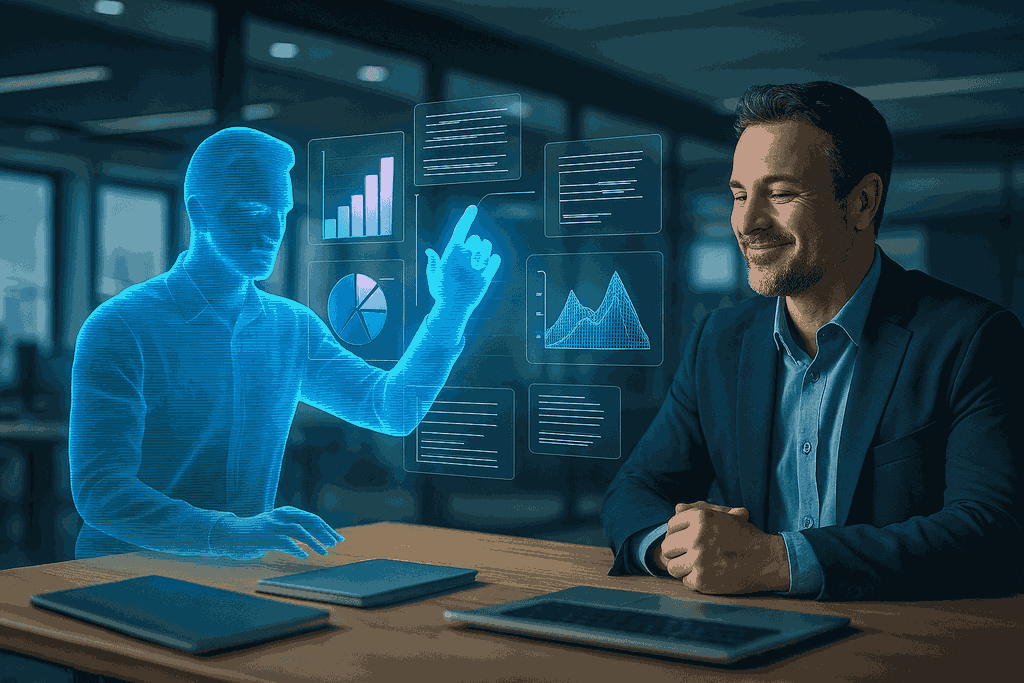
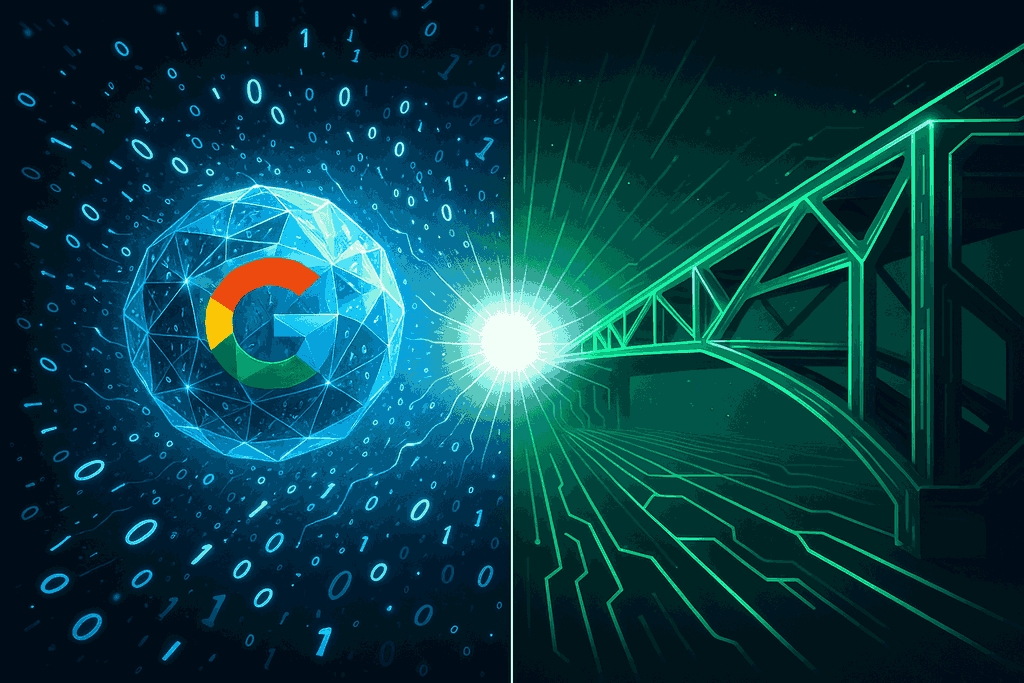
Google debuts its Gemini 3 Pro-based research agent for developers, while OpenAI counters with GPT-5.2, hitting 80% on SWE-Bench Verified.
On December 11, 2025, the AI arms race reached a fever pitch as Google and OpenAI executed simultaneous major product launches. Google unveiled its most advanced "Deep Research" agent,built on the new Gemini 3 Pro architecture,marking the first time developers can directly embed its deep-synthesis capabilities into third-party applications. This strategic move aims to dominate the enterprise utility layer by integrating autonomous research directly into workflows.
Hours later, OpenAI responded by releasing GPT-5.2, a model that redefines coding and reasoning benchmarks. The update introduces a proprietary "response-caching" system designed to slash latency and costs for developers. Early benchmarks indicate a massive leap in technical proficiency, with the model solving 80% of problems on the rigorous SWE-Bench Verified test, signaling a new standard for automated software engineering.
Google’s Deep Research: The Agentic Leap
Google’s release focuses heavily on depth and autonomy. The new "Deep Research" agent is not just a chatbot but a synthesized reasoning engine capable of ingesting massive datasets to produce hallucination-minimized reports. Integrated natively into Google Search and now available via API, the agent is powered by Gemini 3 Pro, which allows it to "think" for extended periods to verify facts across thousands of sources before answering.
GPT-5.2 & The Road Ahead
OpenAI’s GPT-5.2 targets the "builder" economy with distinct upgrades in visual reasoning and unguided problem solving. The model successfully tackled simplified open problems in statistical learning theory without human intervention, a first for commercial LLMs. The launch also emphasized efficiency, with the new caching layer promising to make complex agentic workflows economically viable at scale.
- Caching Economy: OpenAI’s new caching system is expected to reduce high-volume API costs by 50% for repetitive queries.
- Visual & Code Mastery: Enhanced vision capabilities allow the model to parse low-resolution hardware schematics and execute code fixes in real-time.
- Gemini Ecosystem: Google is aggressively pushing the "agent-ready" standard, rolling out managed servers for Maps and BigQuery to simplify third-party integrations.
- Proprietary Reasoning: Both models now feature "thinking" tokens, allowing users to pay for extended compute time to solve multi-step logic puzzles.
MIT AI Predicts Embryo Growth with 90% Accuracy
Date: Dec 15, 2025
Meta Description: MIT engineers unveil a deep learning model mapping 5,000 fruit fly cells with 90% accuracy, unlocking key insights into early disease formation and tissue development.
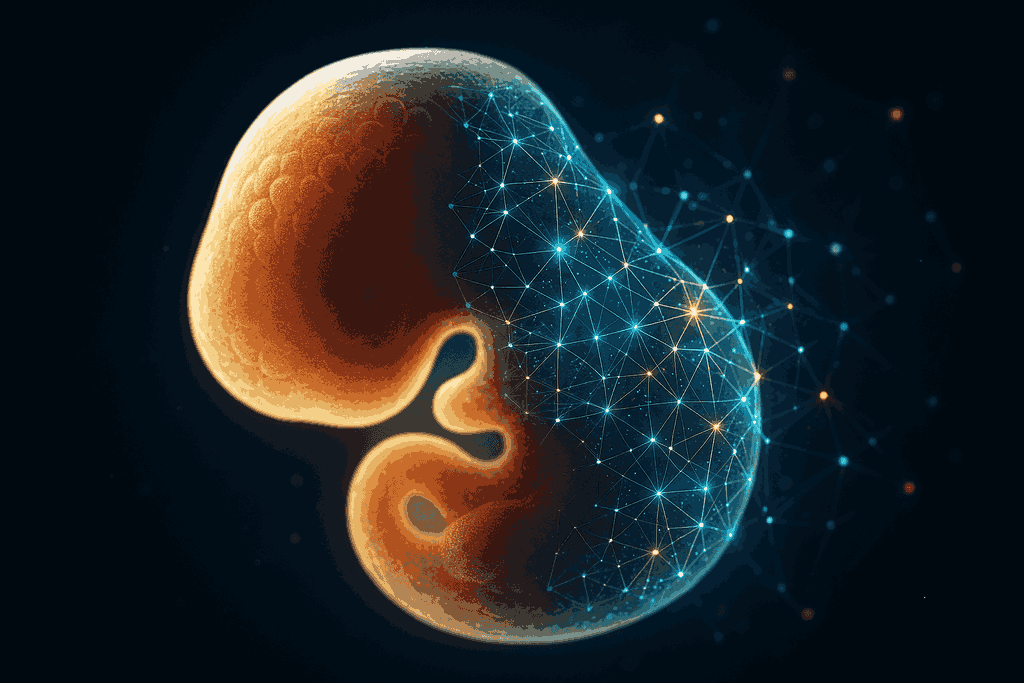
A team of MIT engineers has developed a groundbreaking deep learning model capable of predicting the minute-by-minute development of fruit fly embryos. Published in Nature Methods [[Hyperlink to Official Source]], the study introduces a method to track how 5,000 individual cells fold, divide, and rearrange during the critical first hour of growth known as gastrulation.
This "dual-graph" technology achieves 90 percent accuracy in forecasting cellular mechanics, offering a new window into morphogenesis,the biological process where tissues take shape. By combining two distinct modeling approaches,point clouds and cellular "foam",researchers can now simulate the complex physical forces driving development, potentially paving the way for advanced diagnostics in human diseases like asthma and cancer.
Deep Learning Maps 5,000 Cells in Real-Time
The core innovation lies in the model's ability to solve the complex geometric puzzle of early life. Traditional methods typically model cells either as independent moving points or as a collective "foam" of bubbles. Associate Professor Ming Guo and graduate student Haiqian Yang combined these approaches to capture detailed structural data, such as nucleus location and cell connectivity.
Tested against high-resolution videos from the University of Michigan, the model successfully predicted not just if a cell would detach or divide, but exactly when,often down to the minute. This capability allows scientists to observe the "gigantic dynamics" occurring on the surface of an embryo as it morphs from a smooth ellipsoid into defined structures, decoding the physical rules of life at a submicron resolution.
Decoding Disease Origins & Future Applications
While the current study focuses on Drosophila (fruit flies), the implications extend significantly into human health. The team argues that capturing subtle dynamic differences in tissue behavior could revolutionize how we understand congenital defects and respiratory conditions.
- Cross-Species Scaling: The model is "ready" to be applied to more complex organisms, including zebrafish, mice, and potentially human tissues, pending high-quality video data availability.
- Disease Detection: Researchers aim to identify early-onset patterns for conditions like asthma, where lung tissue development diverges significantly from healthy trajectories.
- Drug Screening: The system could serve as a high-fidelity "digital twin" for testing how drugs influence tissue mechanics and cellular rearrangement.
- Diagnostic Tools: Future iterations could function as real-time diagnostic aids, flagging abnormal cell dynamics before structural defects become visible.