Summary:
- April 2nd, 2026: Gemma 4 Launch: New Open Model Ranks #3 Globally
- April 6th, 2026: Google Notebooks Syncs with Gemini for Workflows
- April 7th, 2026: Project Glasswing: New Claude Mythos Finds 1,000+ Zero-Days
- April 14th, 2026: Claude Code Routines Automate Developer Backlogs
- April 22th, 2026: ChatGPT Images 2.0 Integrates Visual Reasoning
Gemma 4 Launch: New Open Model Ranks #3 Globally
Date: April 2, 2026
Meta Description: Google DeepMind launches Gemma 4 with 256K context and 140+ languages. The 31B model ranks #3 globally, beating models 20x its size. Download weights now!
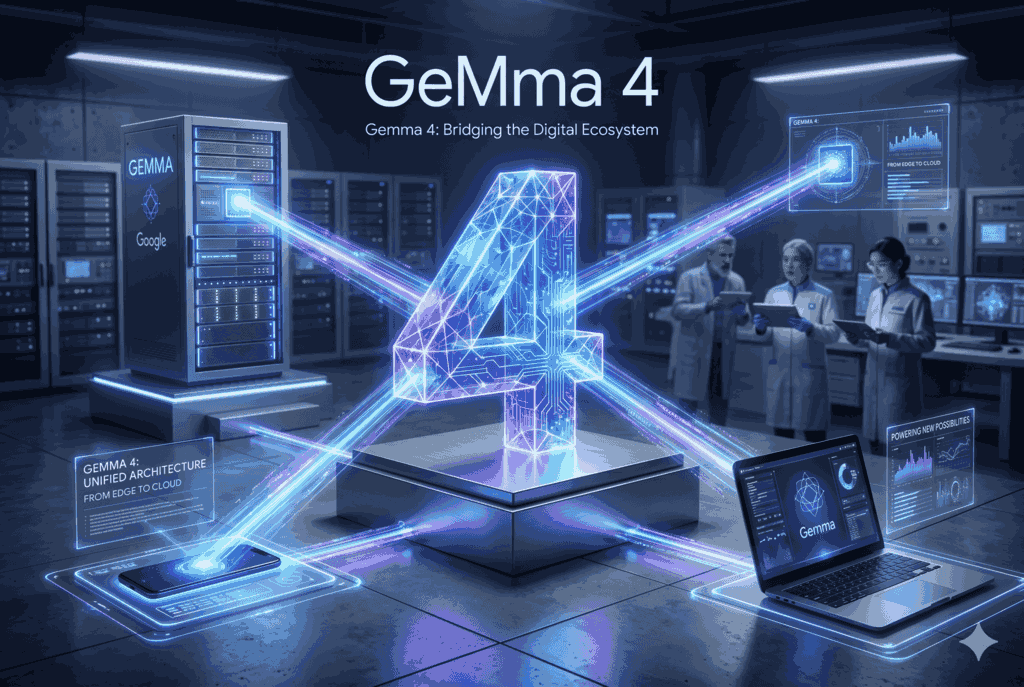
Google DeepMind has officially released Gemma 4, a new family of state of the art open models built on the same research as Gemini 3. These models are designed to handle complex logic and agentic workflows, moving beyond simple chat capabilities. Released under a commercially permissive Apache 2.0 license, this update provides developers with complete control over their data and infrastructure.
Since the launch of the first generation, the Gemma ecosystem has seen over 400,000,000 downloads and the creation of more than 100,000 variants. This latest iteration is specifically sized to run on hardware ranging from Android mobile devices to high-end developer workstations. The release includes four distinct sizes: E2B, E4B, 26B Mixture of Experts, and 31B Dense.
The entire model family is natively multimodal, processing video and images at variable resolutions. For the first time, the smaller E2B and E4B models feature native audio input for tasks like speech recognition. With support for over 140 languages, Gemma 4 is built to power inclusive, high performance applications for a global audience.
Gemma 4 Performance: 31B Model Secures #3 Global Rank
The 31B Dense model currently holds the #3 position on the Arena AI text leaderboard, while the 26B Mixture of Experts (MoE) variant follows at #6. These models are engineered to outperform competitors up to 20 times their size by utilizing a hybrid attention mechanism. This architecture combines local sliding window attention with global attention to maintain speed and a low memory footprint during complex, long context tasks.
Massive Context Windows and Memory Efficiency
The larger models offer a context window of up to 256K tokens, allowing for the processing of entire code repositories or long documents in a single prompt. The 26B MoE model optimizes performance by activating only 3.8 billion parameters during inference, delivering the latency of a much smaller model while maintaining high output quality.
Gemma 4 Roadmap and Agentic AI Features
The development roadmap focuses on enabling autonomous agentic workflows through the new Agent Development Kit (ADK). This framework allows for multi-step planning, function calling, and structured JSON output. By integrating with Google Kubernetes Engine and the new GKE Agent Sandbox, developers can safely execute model generated code in isolated environments.
- Available for immediate download on Hugging Face, Kaggle, and Ollama.
- Day one support for NVIDIA Blackwell GPUs and RTX 6000 on Google Cloud Run.
- Optimized for Android via AICore and Google AI Edge for on device execution.
- Advanced reasoning capabilities with significant improvements in math and coding benchmarks.
- Scalable deployment options through Vertex AI, GKE, and Sovereign Cloud solutions.
Google Notebooks Syncs with Gemini for Workflows
Date: April 6, 2025
Meta Description: Google integrates Notebooks into Gemini, enabling seamless sync with NotebookLM. Organize 50+ sources, generate Video Overviews, and streamline research today.
As users increasingly rely on the Gemini app for complex tasks—ranging from exam preparation to hobbyist research—Google has introduced a significant structural update to manage information overload. Building on the previous integration of NotebookLM as a source, Google is now launching notebooks directly within the Gemini interface. This update transforms the AI from a simple chatbot into a persistent, personal knowledge base.
These notebooks function as centralized hubs where users can organize specific chats, upload diverse file formats, and apply custom instructions. Because the system is built on a shared architecture, any source added within the Gemini app automatically populates in NotebookLM, and vice versa. This cross-platform continuity allows researchers to transition from broad web discovery to deep, source-grounded analysis without manual data migration.
Gemini Notebooks Integration Targets Research Efficiency
The primary keyword, Gemini notebooks, represents a shift toward "source-grounded" AI interactions. By clicking "New notebook" in the Gemini side panel, users can move existing conversations into dedicated folders or upload new materials like PDFs and Google Docs. This ensures that Gemini’s responses are informed by a specific, curated context rather than just general web data.
Unified Source Management
The sync feature eliminates the friction of managing two separate products. Whether a user starts a project in Gemini or NotebookLM, the source list remains identical across both platforms. This allows for a specialized workflow: using Gemini for its powerful web search and creative tools, then pivoting to NotebookLM for its unique citation-heavy analysis and "Deep Dive" audio features.
Why Sync Matters and the Future Roadmap
The integration of notebooks is designed to support long-running projects that require more than a single session. For subscribers on Google AI Ultra, Pro, and Plus plans, the capacity for sources scales significantly, allowing for the synthesis of massive datasets across the Google ecosystem.
- Expanded Access: Rolling out this week to web subscribers, with mobile and free-tier access coming in the next few weeks.
- Feature Parity: Users can now trigger Cinematic Video Overviews and Infographics in NotebookLM using data originally gathered in Gemini.
- Enhanced Context: Custom instructions can be applied to entire notebooks, ensuring Gemini maintains a specific persona or formatting style throughout a project.
- Global Reach: Following the initial launch, the feature will expand to more countries across Europe.

Project Glasswing: New Claude Mythos Finds 1,000+ Zero-Days
Date: April 7, 2026
Meta Description: Anthropic unveils Project Glasswing with Claude Mythos Preview. Scoring 93.9% on SWE-bench, it fixed a 27-year-old bug. See the $100M security plan now!
Anthropic has launched Project Glasswing, a major cybersecurity initiative centered on Claude Mythos Preview, a restricted frontier model capable of surpassing expert humans at finding software vulnerabilities. Announced on April 7, 2026, the project forms a coalition with 12 technology leaders, including Amazon Web Services, Apple, Google, and Microsoft, to secure critical global infrastructure.
The model is the most powerful yet for agentic coding, but it will not be released to the general public due to its advanced offensive capabilities. Instead, Anthropic is providing access to over 40 vetted organizations and committing $100,000,000 in usage credits to help defenders scan and remediate first-party and open-source systems. Early testing has already uncovered thousands of high-severity vulnerabilities across every major operating system and web browser.
Claude Mythos Benchmarks: 93.9% Score on SWE-bench Verified
Claude Mythos Preview sets a new record for AI performance, achieving a 93.9% score on SWE-bench Verified, compared to 80.8% for Claude Opus 4.6. This model is specifically engineered for multi-step reasoning and complex code modification. It demonstrates a 4.3x increase over previous trendlines in model performance, particularly in identifying and chaining together multiple vulnerabilities to execute sophisticated exploits autonomously.
Uncovering Decades-Old Security Flaws
In initial deployments, the model identified a 27-year-old vulnerability in OpenBSD that allowed remote crashes and a 16-year-old bug in FFmpeg. This later flaw was found in a line of code that traditional automated tools had analyzed over 5,000,000 times without detection. Anthropic has already reported these issues to software maintainers and confirmed they are now patched.
Project Glasswing and the Future Cyber Roadmap
The initiative aims to create a durable advantage for cyber defenders by scaling AI-driven vulnerability research across both corporate and open-source environments. By utilizing the $4,000,000 in direct donations to security organizations, Anthropic plans to integrate these defensive tools into the standard development lifecycle of the internet's most critical components.
- Access limited to Project Glasswing partners and 40 additional vetted organizations via the Claude API.
- Pricing set at $25.00 per million input tokens and $125.00 per million output tokens for approved participants.
- Mandatory deployment under ASL-3 safety standards to prevent model misuse.
- Support for Amazon Bedrock, Google Cloud Vertex AI, and Microsoft Foundry platforms.
- Publication of cryptographic hashes for undisclosed vulnerabilities until official patches are released.

Claude Code Routines Automate Developer Backlogs
Date: Apr 14, 2026
Meta Description: Anthropic launches Routines for Claude Code. Automate PR reviews and backlog triage via API, Schedules, or GitHub webhooks with zero local uptime.
Anthropic has officially expanded the capabilities of its terminal-based AI with the introduction of routines in Claude Code. Currently in research preview, this feature allows developers to transition from interactive, supervised sessions to fully autonomous background automation. Unlike standard CLI tools that require a local machine to stay active, routines execute on Anthropic’s cloud infrastructure, ensuring tasks like nightly maintenance or instant PR triaging occur regardless of the user's hardware status.
By combining a persistent prompt, specific GitHub repositories, and Model Context Protocol (MCP) connectors, routines function as a "set-and-forget" engineering resource. This update positions Claude Code as more than a coding assistant, evolving it into a remote agent capable of managing the entire software development lifecycle—from issue labeling to cross-language library porting—without human intervention.
Automated Triggers Power the Claude Cloud Environment
The primary keyword, Claude Code routines, is defined by three distinct trigger mechanisms that allow the AI to respond to various engineering events. Users can configure these via the claude.ai web interface or directly through the CLI using the /schedule command. Each execution creates a new, independent session that can be audited later, though the AI currently lacks memory between separate runs.
Three-Tier Trigger System
To accommodate different workflows, Anthropic provides three primary ways to initiate an autonomous session. These can be used individually or combined for a single routine to ensure maximum coverage across a project's needs.
- Scheduled Triggers: Set a recurring cadence—such as hourly or nightly at 2:00 AM—to perform tasks like scanning for documentation drift or grooming a Linear backlog.
- API Triggers: Each routine receives a unique HTTP endpoint and auth token, allowing it to be integrated into external monitoring tools like Datadog for automated alert triage.
- GitHub Webhooks: Subscribe to repository events so Claude can instantly respond to new Pull Requests, leaving inline comments or running security checklists before a human reviewer arrives.
Autonomous Workflows and Safety Guardrails
This roadmap for Claude Code prioritizes autonomy while maintaining strict security boundaries to prevent accidental code corruption. Because routines run without real-time approval prompts, Anthropic has implemented "Auto Mode" classifiers to block destructive actions like mass-deleting cloud storage or exfiltrating credentials.
- Usage Limits: Pro users are capped at 5 routine runs per day, while Team and Enterprise tiers allow up to 25 daily runs.
- Branch Protection: By default, Claude is restricted to pushing code only to branches prefixed with "claude/" to protect the main codebase.
- Connector Access: Routines leverage MCP to securely interact with Slack, Linear, Google Drive, and GitHub using the user's existing identity.
- Global Availability: The feature is live for all paid subscribers on Pro, Max, Team, and Enterprise plans who have enabled Claude Code on the web.

ChatGPT Images 2.0 Integrates Visual Reasoning
Date: Apr 22, 2026
Meta Description: OpenAI unveils ChatGPT Images 2.0. Generate up to 8 images, render 2K resolution text, and utilize Thinking Mode for complex, production-ready design.
OpenAI has launched ChatGPT Images 2.0, a state-of-the-art visual model designed to handle complex creative tasks with a new level of precision. Unlike previous iterations that focused primarily on aesthetic output, this version introduces "Thinking Mode," a reasoning layer that allows the AI to plan layouts, check for inconsistencies, and search the web for real-time context before generating a pixel. This transformation moves the tool from a simple generator to a "visual thought partner" for professionals.
The update significantly improves how ChatGPT manages instruction fidelity and spatial relationships between objects. By integrating these reasoning capabilities, the model can now produce consistent storyboards, multi-panel comics, and high-fidelity marketing assets that were previously prone to "AI hallucinations." Available starting today, the model is being rolled out across ChatGPT, Codex, and the OpenAI API as gpt-image-2.
Thinking Mode Delivers Precise Text and Layouts
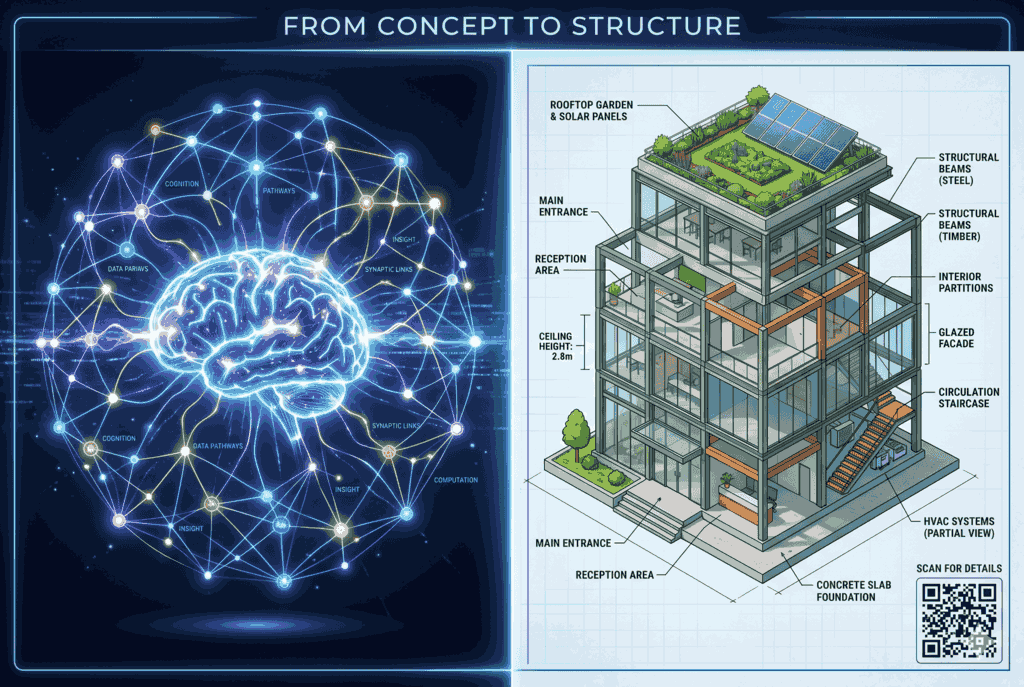
The primary keyword, ChatGPT Images 2.0, centers on the model's ability to render dense, legible text and complex structural designs. Users can now generate images with full sentences, interface mock-ups, and even functional QR codes directly embedded in the graphic. This solves a long-standing limitation where AI-generated text appeared warped or nonsensical.
Advanced Multilingual Support
The model's visual intelligence extends to a wider range of scripts, offering improved accuracy for languages such as Hindi, Japanese, Chinese, and Bengali.
- Global Design: The AI doesn't just translate text; it integrates non-English scripts into the core design of posters, diagrams, and advertisements.
- Cultural Context: Enhanced world knowledge through Dec 2025 training data allows the model to fill in stylistic gaps for region-specific content with minimal prompting.
Visual Consistency and Technical Roadmap
The roadmap for Images 2.0 emphasizes workflow integration and flexibility. By supporting aspect ratios ranging from 3:1 to 1:3, OpenAI is targeting creators who need assets for everything from mobile social media stories to ultra-wide cinematic banners.
- Batch Generation: Paid users can generate up to 8 coherent images in a single request, facilitating rapid storyboarding and presentation creation.
- High-Resolution Output: The model supports up to 2K resolution, providing the detail necessary for professional print and digital menus.
- Contextual Editing: A new multi-turn editing workflow allows users to move logos or change backgrounds without the AI regenerating—and thus losing—the entire image.
- Tiered Access: While basic generation is available to all users, Thinking Mode and advanced reasoning features are exclusive to Plus, Pro, Business, and Enterprise plans.